Search This Blog

Showing posts with label Creativity. Show all posts

Tuesday, July 7, 2020

Plant Diaries: Early Summer Photo Album


The All Peoples Porch Pots and Partner Plots ministry has taken the Community Garden out into the community - way out!  Peeps Plants are growing up in their new homes on porches, in raised beds, in church gardens and home gardens, across a 3-county area.  Here are a few photos that the plants have sent us (with a little help from their caretakers) so we can see how much they've grown!

Oh Baby!  This little cucumber plant made the journey out to 
Waukesha County and is already producing fruits!  Congratulations!


Here's a message from the cucumber plant in this Waukesha County partner
porch garden:  "The tomato plants were complaining because I was
creeping around near them.  Then I felt like I was going over the edge! 
Luckily my caretaker moved me so my baby cukes won't fall to the ground
and I can crawl around as much as I please!"


And here's a message from the tomato plants in that same porch garden:
"Thank goodness that pesky cucumber plant is no longer crowding
us.  It is SO hot out here, but as long as we get the water we
need each day, we love it!  Our caretaker is doing a good job of
giving us a consistent amount of water each day so that we don't 
get yellow spots on our leaves."


We got this message from 3 happy Peeps Plants:  "Check out the 
lovely couple that takes care of us in their partner plot!  They put us
into these big buckets and we are so comfy and have room for our 
roots to grow!  Pretty soon we will give them what they
need to make salsa."

Our friends out in Rubicon made a cool logo for their 
Partner Plot program.  Many of the church members there
have big gardens and even farms!  This is their first year
of partnering up with All Peoples.

One family started a Partner Plot
near the picnic table in their yard.

Another family has a great big garden.  Can you see the
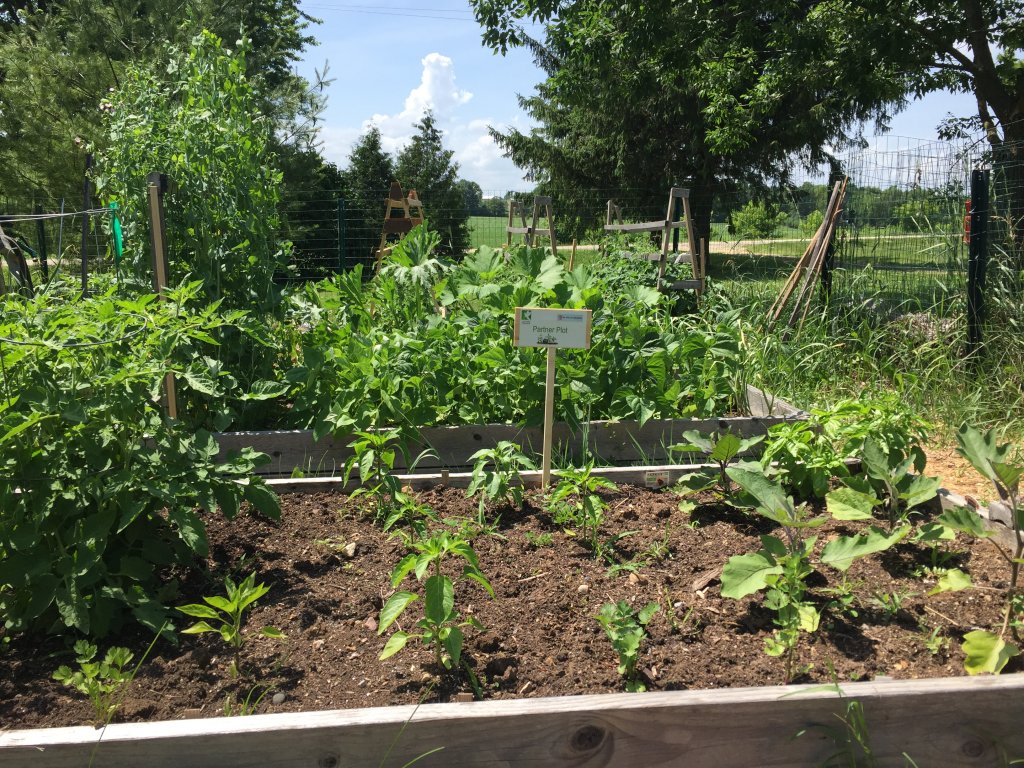
little Partner Plot sign in the garden?

Here's another friend with a Partner Plot which is growing
yummy veggies to share with All Peoples families.

The next time you visit the All Peoples Darius Simmons
Community Garden, you can look for the All Peoples &
St. Olaf Partner Plot sign!  It was a gift from our friends
at our new partner church.


Our friends from St. Olaf noticed that the strawberry farms
in their area had a lot of extra berries on the vines.  They
braved the warm weather to glean the fields so that families
in the All Peoples neighborhood can have fresh, picked strawberries!
Produce from the St. Olaf Partner Plots is usually delivered on Wednesdays
to the All Peoples Free Produce Stand in the community garden.

We hope you are enjoying the photos and the news from the Porch Pots and Partner Plots!!  Thanks to the photographers and communicators who are sharing their stories with us.  

Keep growing, Peeps Plants!!

Monday, June 29, 2020

Chimichurri Basics

Have you ever tried chimichurri?  Maybe you have, but you didn't know it!

Chimichurri is a sauce which you can use as a dipping sauce, a salad dressing, or a marinade for meat.  This style of sauce is very common in Uruguay and Argentina, often served with beef.  Here is Wisconsin, you might not only find it as a dipping sauce for Argentinian beef, but also as one of the dipping sauces served with tacos or empanadas.

Early summer is a good time of year to talk about chimicurri and how to make it.  That's because the main ingredient is a green herb.  I am pretty sure you can experiment with any kind of green, leafy herb for your chimichurri sauce.  The most commonly used ones are flat-leaf parsley or cilantro.  

You can use a blender, a food processor or a knife to finely chop the ingredients.  The basic ingredients are:

1 big bunch of herbs
1 clove of garlic
1/4 cup of olive oil (or another kind if you don't have olive)
2 Tablespoons fresh squeezed lemon juice (or the bottled kind if you don't have a lemon)
2 Tablespoons vinegar (red wine vinegar or apple cider vinegar are best)
Fresh red chile pepper (or substitute red pepper flakes) - this is optional if you want a little heat in your sauce
Salt and pepper to taste

Wash the herbs really well.  The easiest way is to fill a big bowl with water.  Dunk the herbs in there and swish them around.  Lift them out and put them into a colander.  Dump the dirty water on your plants outside.  Repeat this process until the water does not look dirty.

Pat the herbs dry with a clean towel.  Remove any yucky leaves and break off any thick stems.  Put those in your compost.

Chop the herbs and garlic until they are really small.  Then add the other ingredients and mix well.  Or, just put the herbs, garlic and liquids into the food processor and pulse a few times, then process till everything is mixed.  You can add a little extra lemon juice and vinegar if it is too thick.

This batch of chimichurri is made with cilantro.

You can see some ingredients here.  You can experiment
with different flavors of oil, vinegar and lemon or lime.

This is what it looks like when it is chopped.  Use
a plastic spatula to scrape the sides of the bowl so
you get everything mixed.  That blade is sharp!  
If you are a kid, get help from a grown-up.

Storing chimichurri, pesto and other sauces in reusable glass
jars is a good idea.  Put a little paper label on top with the name
of what's inside and the date.  If you aren't going to use the sauce
right away, put it in your freezer.

What herbs are growing in the All Peoples Darius Simmons Community Garden?  Maybe you can find some and experiment with making chimichurri or pesto.  Perhaps you could experiment with:
Basil
Chives
Oregano
Cilantro
Flat leaf parsley
Garlic chives (eliminate the garlic clove if you use these)
Mint
Sage
Tarragon

Although purslane is not an herb, it's worth experimenting with those leaves too!

Once your chimichurri is made, you can use it as a dipping sauce or to marinade chicken or beef or pork.  Another easy idea is to cook some pasta, drain it, and put some chimichurri or pesto into the pasta pan, dump the pasta back in, put it over low heat and carefully stir it up for a couple of minutes until it is warm and mixed.  

Have fun experimenting!!


Wednesday, June 3, 2020

Chives, chives, chives!

I grew up in Wisconsin and lived pretty close to Underwood Creek, back when it was still a natural creek (or crick, as we would say).  One of my memories of springtime is the taste of wild chives.  We used to walk in the woods along that creek looking for crayfish and would munch on chives for a snack.

Maybe that was a little weird for a kid, but how many of us as adults love our sour cream and chives on baked potatoes?  You know what I am talking about.  Yum!

One of the chive pots on my front porch. This is a sister plant
to the ones that grow along the All Peoples Greenhouse.
Springtime is chive time.  Specifically, springtime is the time when chives bloom.  Different varieties of chive plants produce flowers from pale pink (almost white), to deep purple, to dusky blue (if you are growing garlic chives).  Leaves can vary in color from lime green to forest green, some are rounder and some more flat.  A fun thing to do with kids or adults is a taste test - pick a chive leaf from each different plant and see if you can taste any difference as you munch on the different leaves.

Most of the time, chive harvesting is done by cutting the leaves off of the plant with a scissors.  Cut them in bunches, leaving about an inch of leaf left at the base.  Wash and dry them, then snip away over your salads, soups and baked potatoes.  Chives are best when harvested right before you use them, and you can cut them all summer long. 

However, in early June, while it is in full bloom, before the plant produces little black seeds between the flower petals, the chive flower is delicious to eat!  The chive flower sits atop a stalk that is coarse and not good for snipping. We have all probably gotten that tough flower stem stuck in the scissors while trying to cut the leaves.  Harvest the flower by plucking the head off of the stem. Let the stem remain part of the plant and dry.  Gather a few fresh flowers in the morning to wash and break apart over your salad or sandwich.  If you aren't sure what the taste is like, sample one little bloom from the compound flower head.  Enjoy it's delightful crunch and burst of sweet, onion flavor.


To keep your chive plants healthy, leave some flowers on the plant and let them go to seed.  Most mature plants produce more flowers than are needed for seed or that can be used for salads.  Another fun thing to do with chive flowers is to make chive-infused vinegar.

Pop your clean chive flowers into small glass bottles or jars.  You can experiment
with the number of flowers needed for the flavor strength that you like.
I usually use 3 flowers for each small bottle.

My chive flowers are huge.  I try to pick smaller ones, and close them up
a bit to push them, stem first, into the bottles.  I use a chop stick to get them in there.
Don't worry if a few small pieces fall off.  I just toss them in with the flowers.

Use a funnel and carefully add distilled, white vinegar
to each bottle.  The flowers will float up a bit.  I bought bottles
with the nifty plastic tops that snap on for easy drizzles onto
salads and such, but you can use whatever bottles you have.
If you use recycled bottles (with or without the plastic toppers)
be sure to wash them super well so they don't have residual smells.

Screw the lids on tightly and set your vinegar in a cool,
dark place, like a cupboard.  After one day, you will already
see a change! Store in a cupboard, away from sunlight to retain
the pink color.  The chive flavor will grow stronger as it sits,
and after about 2 weeks it is ready to use. You can keep it for 2 years.

During the summer, you can freeze little bundles of snipped up chives to pop into your winter soups and stews.  The dry flower stalk is sturdy, and you can use it as a natural skewer.  I leave all the dead growth on my plants over the winter to protect them.  In the spring, before the leaves begin to sprout again, I remove most of the dead stuff and add it as a brown ingredient to my compost.  

What are your favorite things to do with chives?  Tell your stories and share your photos in the comments!

Submitted by Linda Muth


Saturday, May 30, 2020

We Grow Artists!

You see an old bed frame.  We see a trellis.


In the All Peoples Darius Simmons Community Garden, we grow more than plants.  We grow artists!  One way in which we do that is by up-cycling donated items to create quirky, fun structures which help support our plants as they grow and help support our community's creative spirit.

Headboards and baby crib rails make perfect trellises for our raspberry hedge.  We planted the hedge next to the public sidewalk to serve both as a perimeter for our garden and so passers-by can grab a couple of berries for a snack as they walk along.  Every spring, we prune the dead canes and weave the new growth into the slats and curves of our re-purposed trellises.  Of course, we love to paint our trellises with bright, cheery colors, which helps remind our neighbors not to step on baby bushes as they are growing.


During this season's stay-at-home time, families have picked up old vinyl banners (blank on the back side) and permanent markers to create positive message posters.  Positive messages of hope, faith and love are as important to building a healthy community as are fruits and vegetables!  One of All Peoples core values is:  We Serve Soul Food.  The community garden is a great example of how we live into that core value spiritually and nutritionally.


A few weeks ago, we put out the word to friends and partners that we would gladly accept donations of planting pots, trellis items, plant stakes and fencing items.  Friends responded to the call, safely dropped their items outside of their church, and after checking in with us, dropped them off at our garden table.  We sprayed them down and then had great fun checking out our newest treasures! 


Ladders, old kitchen racks, tomato cages, planters, wire, whirly flowers, sprinkling cans, vinyl sheets, fencing...you name it, we create with it!  Especially in times of unrest and uncertainty, creating and sharing hopeful and cheerful art in a natural space which grows heathy food brings life and peace to our neighborhood.  


If you have items for us to repurpose, please contact the church office at 414-264-1616.